
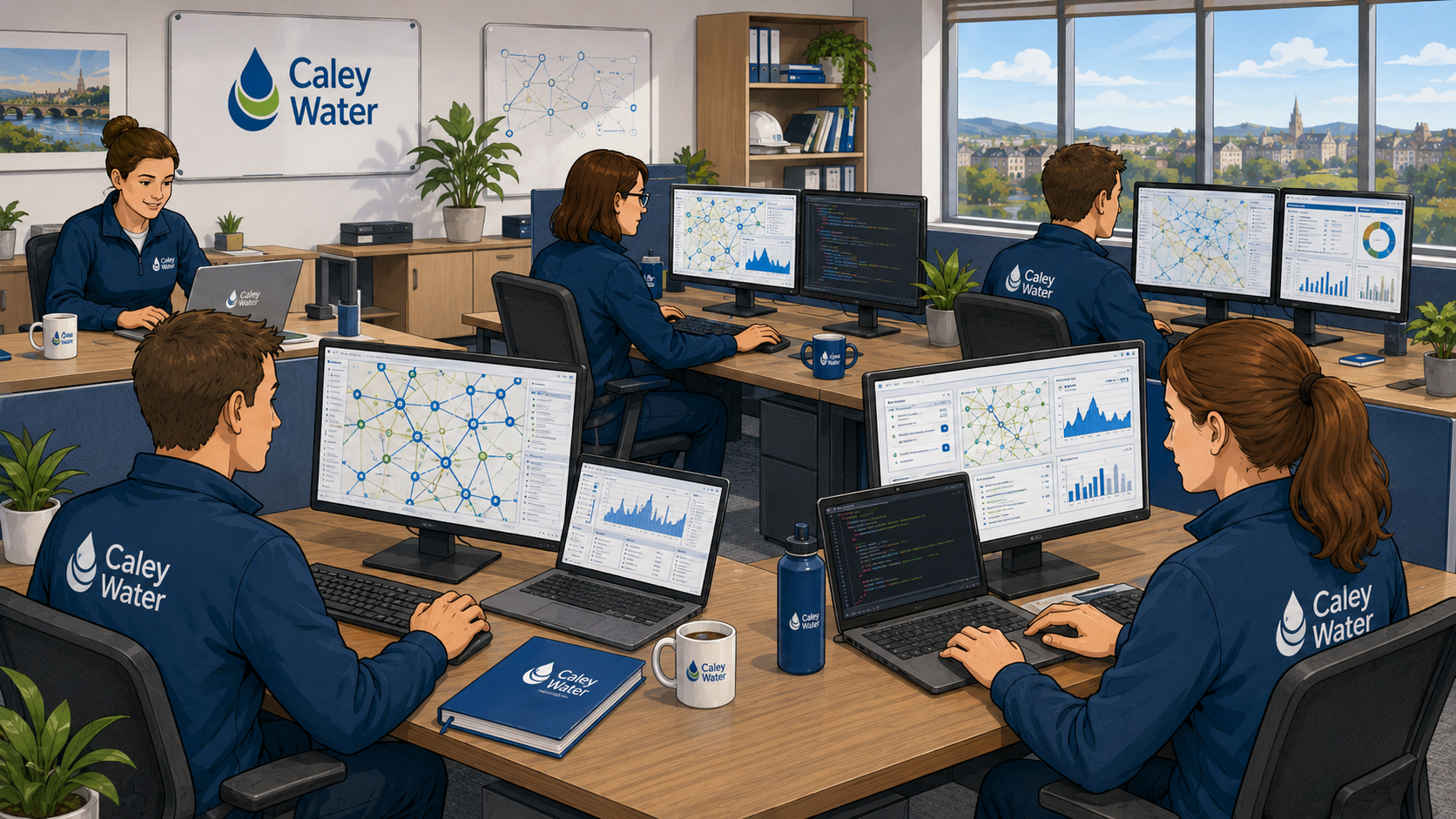
Artificial Intelligence (AI) is becoming increasingly prominent across a wide range of industries, and the water and environmental sectors are no exception. From processing large datasets to assisting with coding, automation and analysis, AI has the potential to change the way engineers, consultants and hydraulic modellers approach complex technical work.
For hydraulic modelling in particular, AI can offer significant advantages. However, it is important that its capabilities are viewed realistically. AI is a tool rather than a replacement for engineering knowledge, experience and professional judgement.
Used appropriately, AI can help experienced professionals work more efficiently. Used without adequate oversight, it can also introduce errors, uncertainty and unnecessary risk.
What Role Can AI Play in Hydraulic Modelling?
Hydraulic modelling often involves large quantities of information. Survey data, drainage networks, catchment characteristics, rainfall events, asset information and model results can all require processing and interpretation.
Although established hydraulic modelling software already performs much of the specialist numerical analysis, AI can assist with many of the surrounding processes.
This may include helping to:
- organise and process large datasets;
- automate repetitive modelling tasks;
- identify inconsistencies within data;
- assist with the development of scripts and software tools;
- interpret and summarise model outputs;
- prepare documentation and technical information;
- develop repeatable workflows;
- investigate alternative approaches to a technical problem.
One of AI’s greatest potential advantages is therefore not necessarily that it replaces existing modelling software, but that it can help engineers interact with data and automate the processes surrounding the construction, analysis and maintenance of hydraulic models.
Improving Efficiency Through Automation
Hydraulic modelling projects frequently contain tasks which are relatively straightforward but time-consuming when undertaken manually.
A modeller may need to rename or modify hundreds of model elements, convert data between formats, analyse model results across numerous scenarios or repeatedly apply the same calculations to large datasets.
Traditionally, many of these processes have been automated through scripting languages and customised software tools.
AI can make the development of these tools faster by assisting experienced users with the creation, testing and refinement of computer scripts.
This allows modelling teams to spend less time carrying out repetitive data-processing tasks and more time concentrating on engineering analysis, model verification and interpretation.
Automation can also help improve consistency. A well-designed script can perform the same process thousands of times without the minor variations that can sometimes arise when repetitive work is undertaken manually.
Working With Large Volumes of Data
Modern hydraulic modelling increasingly depends upon large and varied datasets.
These may include:
- CCTV and drainage survey information;
- LiDAR and topographical data;
- flow and rainfall monitoring records;
- sewer and drainage asset databases;
- GIS information;
- historical flooding records;
- model simulation results.
AI-assisted tools can help engineers interrogate these datasets more quickly and identify patterns or potential inconsistencies which warrant further investigation.
For example, automated processes may help highlight unusual values, missing information or differences between datasets.
However, identifying an anomaly and understanding why it exists are two very different things.
A value which appears unusual may represent an error, but it may equally reflect a genuine feature of the drainage network or catchment. This is where engineering experience remains essential.
Faster Development of Specialist Tools
One particularly useful application of AI is its ability to assist engineers and technical specialists with software development.
Hydraulic modelling teams have long used programming and scripting languages to extend the capabilities of modelling software and automate specialist processes.
AI coding tools can accelerate this work by helping users develop scripts, troubleshoot errors and explore different programming approaches.
For an experienced modeller who understands both the intended engineering process and the underlying data, this can be extremely powerful.
A task which might previously have required several hours of manual coding and testing may be developed considerably more quickly.
This does not remove the requirement for technical understanding. The modeller still needs to know what the script should do, whether the methodology is appropriate and whether the resulting output is correct.
The Risk of Incorrect Information
Perhaps the greatest limitation of current AI systems is that they can sometimes produce information which appears convincing but is incorrect.
This can be particularly problematic in highly technical environments.
An AI system may produce a piece of computer code which looks perfectly reasonable but contains a subtle error. It may suggest an engineering approach which is inappropriate for a particular modelling situation, or confidently provide an explanation based upon an incorrect assumption.
In a casual application, such mistakes may be inconvenient.
Within engineering analysis, however, inaccurate information can potentially influence decisions concerning infrastructure, investment or flood risk.
AI-generated output therefore needs to be checked and validated by appropriately experienced professionals.
Understanding the Context
Hydraulic models are rarely simple representations of perfectly documented systems.
Real drainage networks contain unusual arrangements, incomplete records, historic modifications and assets whose behaviour may not always be immediately obvious from the available data.
Experienced hydraulic modellers develop an understanding of how these systems behave.
They can consider factors such as:
- the quality and reliability of survey information;
- uncertainty within monitoring data;
- unusual network configurations;
- historic drainage arrangements;
- limitations within the model;
- the practical behaviour of drainage infrastructure.
AI systems do not automatically possess this project-specific understanding.
They can help process information, but the interpretation of that information must remain grounded in engineering knowledge and an understanding of the real system being represented.
Data Security and Confidentiality
The increasing use of AI also raises important questions surrounding data security.
Engineering projects can contain commercially sensitive information, infrastructure data and confidential client material.
Organisations therefore need to consider carefully what information is provided to external AI platforms and how that information may be stored or processed.
Internal policies, contractual requirements and client confidentiality obligations should always be considered before project information is entered into an AI system.
For many engineering organisations, developing clear policies governing appropriate AI use will become increasingly important.
Maintaining Engineering Skills
Another potential concern is over-reliance on automated tools.
Automation is extremely valuable when the person using it understands the process being automated.
Problems can arise when users become dependent upon a tool without understanding how it reaches its result.
This principle already applies to hydraulic modelling software itself. A sophisticated computer model cannot replace an understanding of hydraulic principles.
The same applies to AI.
If AI writes a piece of code, the engineer should still understand what the code is doing. If AI suggests a modelling methodology, that methodology should still be reviewed against accepted engineering practice.
Maintaining strong technical skills therefore remains just as important as new technologies emerge.
AI as an Engineering Assistant
Perhaps the most useful way to view AI is as an increasingly capable technical assistant.
It can help engineers explore ideas, automate repetitive processes, develop software tools and interrogate information more efficiently.
However, responsibility for the engineering work remains with the professionals carrying it out.
The most effective use of AI is therefore likely to involve combining the speed and processing capabilities of modern technology with the knowledge, experience and judgement of skilled engineers and hydraulic modellers.
How Caley Water Uses AI
At Caley Water, we recognise the potential of AI to improve efficiency while also recognising the importance of maintaining appropriate technical oversight.
One area where we utilise the power of AI is in assisting with the development of complex Ruby scripts used within hydraulic modelling workflows.
Ruby scripting can provide powerful opportunities to automate tasks which would otherwise require substantial amounts of manual model manipulation or data processing. AI-assisted development can help accelerate the construction and refinement of these scripts, allowing sophisticated modelling tools to be produced more efficiently.
These scripts can be used to expedite a variety of hydraulic modelling processes, including repetitive model modifications, interrogation of model networks, processing of simulation results, quality assurance checks and the transformation of data between different formats.
The real benefit comes from combining AI-assisted coding with the knowledge of experienced hydraulic modellers.
Rather than allowing AI to determine how a model should be constructed or interpreted, our engineers define the required process and use AI as one of several tools available to help implement it efficiently.
The resulting scripts are then reviewed, tested and validated against the intended modelling methodology.
Used in this way, AI can remove some of the repetitive workload associated with complex hydraulic modelling projects while allowing experienced modellers to concentrate on the areas where their expertise provides the greatest value: understanding networks, evaluating results and making informed engineering judgements.
As AI technology continues to develop, it will undoubtedly provide further opportunities for the water industry. The challenge will be to adopt these technologies where they genuinely improve efficiency and quality, while maintaining the engineering expertise, verification and professional judgement upon which reliable hydraulic modelling ultimately depends.